✨ New Arrivals Just Dropped!Explore

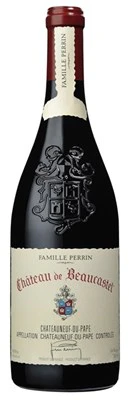
Château De Beaucastel, Chateauneuf De-Pape Rouge 2022
The 16th century Château de Beaucastel was acquired by the Perrin family in the early 1900s. With a global following for their benchmark Châteauneuf du Pape, the wines at this historic property are consistently among the finest in the region.Château de Beaucastel owns 110 hectares of vineyards in the north of the Châteauneuf-du-Pape appellation, where they grow all 13 grape varieties authorised by the appellation rules. The vines are farmed organically and are on average 50-years-old. They are planted on pudding stone soils, which are traditional to the Southern Rhône. These stones retain heat from the day and keep the vines warm at night, helping to ripen the grapes. The sub-soils are made up of sand, clay and limestone.
$214.34
Château De Beaucastel, Chateauneuf De-Pape Rouge 2022—
$214.34
Château De Beaucastel, Chateauneuf De-Pape Rouge 2022
The 16th century Château de Beaucastel was acquired by the Perrin family in the early 1900s. With a global following for their benchmark Châteauneuf du Pape, the wines at this historic property are consistently among the finest in the region.Château de Beaucastel owns 110 hectares of vineyards in the north of the Châteauneuf-du-Pape appellation, where they grow all 13 grape varieties authorised by the appellation rules. The vines are farmed organically and are on average 50-years-old. They are planted on pudding stone soils, which are traditional to the Southern Rhône. These stones retain heat from the day and keep the vines warm at night, helping to ripen the grapes. The sub-soils are made up of sand, clay and limestone.
Product Information
Product Information
Shipping & Returns
Shipping & Returns
Description
The 16th century Château de Beaucastel was acquired by the Perrin family in the early 1900s. With a global following for their benchmark Châteauneuf du Pape, the wines at this historic property are consistently among the finest in the region.Château de Beaucastel owns 110 hectares of vineyards in the north of the Châteauneuf-du-Pape appellation, where they grow all 13 grape varieties authorised by the appellation rules. The vines are farmed organically and are on average 50-years-old. They are planted on pudding stone soils, which are traditional to the Southern Rhône. These stones retain heat from the day and keep the vines warm at night, helping to ripen the grapes. The sub-soils are made up of sand, clay and limestone.