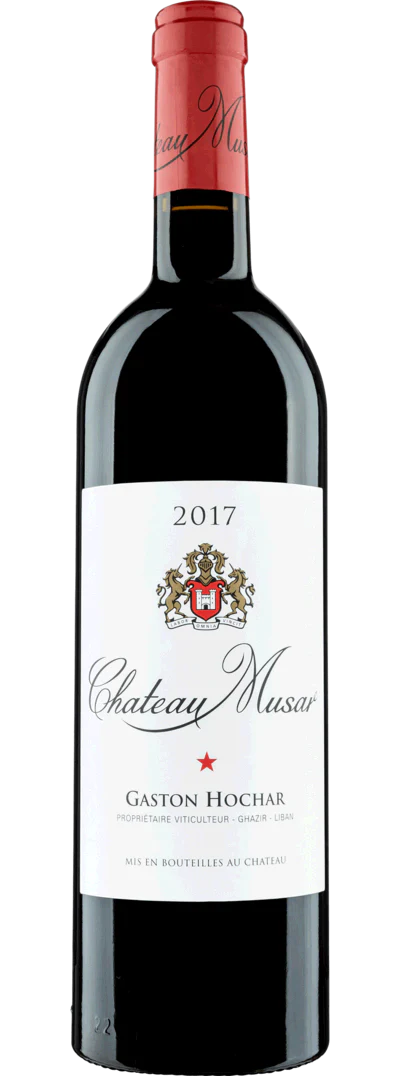
Château Musar, Bekaa Valley Lebanon 2017
Overview
We began the year with high hopes after experiencing above average rain and snowfall in January, leading to expectations that the water table would be replenished. More rain and snow followed in February and non-stop in March but turned into a mild spring with temperatures rising in April, though not excessively. In fact, opening of buds on the vines was 10 days later than usual due to low air temperatures and comparatively cold soils. In late April a one day frost hit the Bekaa Valley but at the time was not seen as particularly harmful. We were only to learn of the effects of that day at harvest time when it transpired that the vines pruned in early winter had indeed suffered, though Cinsault proved the most resistant. On the 24th June, the temperature reached 37 degrees and this heat continued until mid-August affecting the vines and grapes resulting in lower yields. We started harvesting Cabernet Sauvignon on the 22nd August, Cinsault the 4th September and Carignan on the 7th. Grape Varietals An equal blend of Cabernet Sauvignon, Cinsault, Carignan Winemaking Each varietal was fermented with natural yeasts in concrete vats, then aged for 12 months in French Nevers oak barrels before blending in early 2020 and bottled without fining or filtration during the summer months. Fermentation proceeded smoothly and temperatures ranged between 27 and 30 degrees. All the wines proved very aromatic and in particular the last Cabernet Sauvignon picked, showed for the first time, aromas and taste of exotic fruits and even guava. Malolactic fermentation finished by 1st November and preliminary tastings showed that 2017 is a different year with more structure and power, reminding us of 2007, 1997 and 1987 vintages, as if it was a decade style.
Château Musar, Bekaa Valley Lebanon 2017
Overview
We began the year with high hopes after experiencing above average rain and snowfall in January, leading to expectations that the water table would be replenished. More rain and snow followed in February and non-stop in March but turned into a mild spring with temperatures rising in April, though not excessively. In fact, opening of buds on the vines was 10 days later than usual due to low air temperatures and comparatively cold soils. In late April a one day frost hit the Bekaa Valley but at the time was not seen as particularly harmful. We were only to learn of the effects of that day at harvest time when it transpired that the vines pruned in early winter had indeed suffered, though Cinsault proved the most resistant. On the 24th June, the temperature reached 37 degrees and this heat continued until mid-August affecting the vines and grapes resulting in lower yields. We started harvesting Cabernet Sauvignon on the 22nd August, Cinsault the 4th September and Carignan on the 7th. Grape Varietals An equal blend of Cabernet Sauvignon, Cinsault, Carignan Winemaking Each varietal was fermented with natural yeasts in concrete vats, then aged for 12 months in French Nevers oak barrels before blending in early 2020 and bottled without fining or filtration during the summer months. Fermentation proceeded smoothly and temperatures ranged between 27 and 30 degrees. All the wines proved very aromatic and in particular the last Cabernet Sauvignon picked, showed for the first time, aromas and taste of exotic fruits and even guava. Malolactic fermentation finished by 1st November and preliminary tastings showed that 2017 is a different year with more structure and power, reminding us of 2007, 1997 and 1987 vintages, as if it was a decade style.
Product Information
Product Information
Shipping & Returns
Shipping & Returns
Description
Overview
We began the year with high hopes after experiencing above average rain and snowfall in January, leading to expectations that the water table would be replenished. More rain and snow followed in February and non-stop in March but turned into a mild spring with temperatures rising in April, though not excessively. In fact, opening of buds on the vines was 10 days later than usual due to low air temperatures and comparatively cold soils. In late April a one day frost hit the Bekaa Valley but at the time was not seen as particularly harmful. We were only to learn of the effects of that day at harvest time when it transpired that the vines pruned in early winter had indeed suffered, though Cinsault proved the most resistant. On the 24th June, the temperature reached 37 degrees and this heat continued until mid-August affecting the vines and grapes resulting in lower yields. We started harvesting Cabernet Sauvignon on the 22nd August, Cinsault the 4th September and Carignan on the 7th. Grape Varietals An equal blend of Cabernet Sauvignon, Cinsault, Carignan Winemaking Each varietal was fermented with natural yeasts in concrete vats, then aged for 12 months in French Nevers oak barrels before blending in early 2020 and bottled without fining or filtration during the summer months. Fermentation proceeded smoothly and temperatures ranged between 27 and 30 degrees. All the wines proved very aromatic and in particular the last Cabernet Sauvignon picked, showed for the first time, aromas and taste of exotic fruits and even guava. Malolactic fermentation finished by 1st November and preliminary tastings showed that 2017 is a different year with more structure and power, reminding us of 2007, 1997 and 1987 vintages, as if it was a decade style.