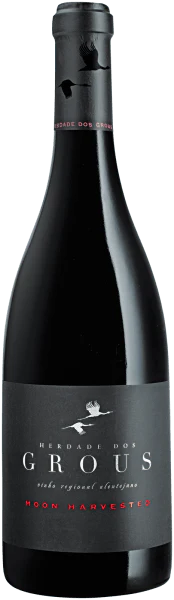
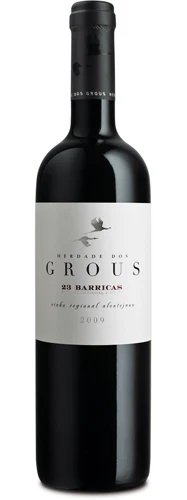
Herdade dos Grous 23 Barricas
Herdade dos Grous was established first as a luxury tourist resort, with a small boutique hotel and a 90-hectare lakesharing the landscape with olive trees, mint, cows, sheep and pigs that feed on acorns from cork trees and eventually make the famous ‘pata negra’ hams. The owners planted their first grapes in 2002 and now have vineyards stretching across 70 hectares of the estate, cultivating a wide variety of local and international grape varieties. The white schist soil houses Aragonês (Grenache), Touriga Nacional, Tinta Miuda (Graciano), Alicante Bouschet, Tempranillo, Syrah, Nebiollo and Sangiovese varieties, whilst the white grapes include Antão Vaz, Arinto, Roupeiro, Verdelho, Viognier, Vermentino and Semillion.
At the hands of winemakers, Pedro Ribeiro and Luis Duarte (who is responsible for some of the finest wines to come from the Alentejo) this landscape yields some of the richest, most complex wines to come from this part of the country. The challenges of producing wine in such a climate are not new to Pedro, who spent a number of years making wine in Australia’s Barossa Valley, before returning to his homeland to try his hand at producing elegant, refined wines from the dry, hot land.
Original: $58.25
-65%$58.25
$20.39Herdade dos Grous 23 Barricas
Herdade dos Grous was established first as a luxury tourist resort, with a small boutique hotel and a 90-hectare lakesharing the landscape with olive trees, mint, cows, sheep and pigs that feed on acorns from cork trees and eventually make the famous ‘pata negra’ hams. The owners planted their first grapes in 2002 and now have vineyards stretching across 70 hectares of the estate, cultivating a wide variety of local and international grape varieties. The white schist soil houses Aragonês (Grenache), Touriga Nacional, Tinta Miuda (Graciano), Alicante Bouschet, Tempranillo, Syrah, Nebiollo and Sangiovese varieties, whilst the white grapes include Antão Vaz, Arinto, Roupeiro, Verdelho, Viognier, Vermentino and Semillion.
At the hands of winemakers, Pedro Ribeiro and Luis Duarte (who is responsible for some of the finest wines to come from the Alentejo) this landscape yields some of the richest, most complex wines to come from this part of the country. The challenges of producing wine in such a climate are not new to Pedro, who spent a number of years making wine in Australia’s Barossa Valley, before returning to his homeland to try his hand at producing elegant, refined wines from the dry, hot land.
Product Information
Product Information
Shipping & Returns
Shipping & Returns
Description
Herdade dos Grous was established first as a luxury tourist resort, with a small boutique hotel and a 90-hectare lakesharing the landscape with olive trees, mint, cows, sheep and pigs that feed on acorns from cork trees and eventually make the famous ‘pata negra’ hams. The owners planted their first grapes in 2002 and now have vineyards stretching across 70 hectares of the estate, cultivating a wide variety of local and international grape varieties. The white schist soil houses Aragonês (Grenache), Touriga Nacional, Tinta Miuda (Graciano), Alicante Bouschet, Tempranillo, Syrah, Nebiollo and Sangiovese varieties, whilst the white grapes include Antão Vaz, Arinto, Roupeiro, Verdelho, Viognier, Vermentino and Semillion.
At the hands of winemakers, Pedro Ribeiro and Luis Duarte (who is responsible for some of the finest wines to come from the Alentejo) this landscape yields some of the richest, most complex wines to come from this part of the country. The challenges of producing wine in such a climate are not new to Pedro, who spent a number of years making wine in Australia’s Barossa Valley, before returning to his homeland to try his hand at producing elegant, refined wines from the dry, hot land.